Living a full and independent life as we age is a goal we all share. This process, known as active aging, rests on three fundamental pillars: physical health, cognitive health, and social well-being. However, we often overlook a factor that directly influences all of them: hearing.
Good hearing health not only allows us to enjoy the sounds around us, but it’s also key to maintaining balance, mental agility, and a rich social life. In this article, we’ll explore how healthy hearing is essential for healthy aging and when it’s the right time to start getting it checked and, if necessary, take action.
Start taking care of your hearing health today. A timely checkup can make all the difference to your physical, cognitive, and social well-being. At Clinicaudio, we offer a free, comprehensive, and personalized evaluation.
Active aging: the central role of hearing
Active aging is defined as the process of optimizing opportunities for health, participation, and security to enhance quality of life as people age. Hearing is a silent yet powerful connector that links physical, cognitive, and social well-being. Therefore, caring for it is fundamental to maintaining our independence and enjoying an active and fulfilling life.
Physical health: balance, mobility and safety
Good hearing is directly related to our balance and spatial orientation. The inner ear plays a crucial role in regulating balance, so untreated hearing loss can increase the risk of falls and accidents, especially in older adults. Not hearing warning sounds like a doorbell, an alarm, or traffic can compromise our safety.
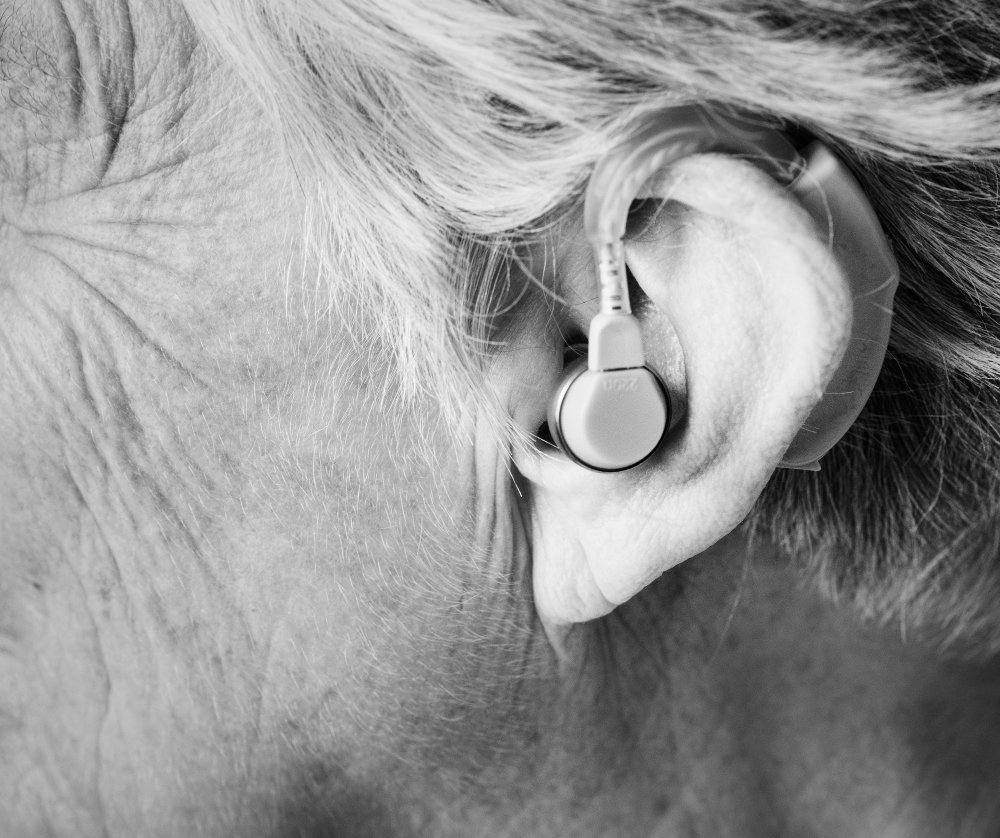
Hearing aids, when necessary, not only improve the ability to hear, but also provide the brain with the necessary sound information to maintain better stability and orientation, restoring confidence and independence in daily life.
Cognitive health: memory, attention, and mental effort
The connection between hearing and the brain is profound. When we don’t hear well, the brain must constantly overexert itself to decipher conversations and sounds, diverting cognitive resources that should be used for other functions such as memory and attention. Several studies, such as those by the Lancet Commission and the Johns Hopkins Bloomberg School of Public Health, have demonstrated a significant association between untreated hearing loss and an increased risk of cognitive decline.
Using hearing aids reduces this mental load, allowing the brain to function more efficiently. This translates into improved attention, greater ease in following conversations, and better preservation of cognitive function in the long term.
Social well-being: participation and emotional life
The ability to communicate is fundamental to our relationships. Hearing loss can make it difficult to follow conversations, especially in noisy environments, leading many people to avoid family gatherings and social activities. This progressive isolation is a known risk factor for loneliness and depression.
Hearing aids act as a bridge to others, facilitating communication and allowing people to once again enjoy the company of friends and family. By regaining the ability to actively participate in conversations, emotional well-being is strengthened and loneliness is combated.
At what age should the first hearing test be performed?
Although there’s no hard and fast rule, at Clinicaudio we recommend having your first comprehensive hearing test between the ages of 50 and 60, even if you don’t notice any obvious symptoms. Age-related hearing loss, or presbycusis, is usually gradual. Detecting it early allows for preventative measures and a more natural adjustment to hearing aids.
Signs that it's time to get your hearing checked
It is important to be aware of certain signs that may indicate early hearing loss:
Social
Frequently asking for things to be repeated, turning up the volume of the television or radio more than normal, or avoiding social gatherings.
Cognitive
Feeling mentally fatigued after a conversation, having difficulty following the thread in groups, or feeling confused in noisy environments.
Physics
Experiencing ringing in the ears (tinnitus) or noticing a feeling of disorientation or occasional unsteadiness.
If you experience any of these signs, it’s a good time to request a professional hearing test.
When is it necessary to fit a hearing aid?
A hearing test doesn’t always mean you need hearing aids. However, if tests like audiometry show hearing loss that affects your ability to understand speech, a specialist may recommend fitting them.
Fitting hearing aids early is crucial. The sooner you act, the easier it will be for your brain to readjust to processing sounds, thus preserving cognitive health and significantly improving your quality of life.
Clinicaudio's support for your hearing health
At Clinicaudio, we understand that every person is unique. That’s why we offer a personal and compassionate approach, using the latest technology to conduct a comprehensive and customized assessment. Our methodology focuses on gradual adaptation and ongoing support to ensure you find the most comfortable and discreet hearing solution, perfectly suited to your lifestyle.
Take action today for a healthier future
Taking care of your hearing is a direct investment in your quality of life and in healthy, active aging. Don’t underestimate the impact good hearing has on your physical, mental, and social well-being. Acting early makes all the difference.
If you want to maintain an active and healthy lifestyle, getting your hearing checked regularly makes all the difference. At Clinicaudio, we provide a comprehensive, personalized hearing assessment tailored to your needs. Book your free, no-obligation hearing test and discover how to improve your physical, cognitive, and social well-being.
Book your free hearing test and discover how to improve your physical, cognitive and social well-being.
Can hearing loss lead to social isolation?
Maintaining an active social life is key to healthy aging, and hearing plays a fundamental role in this. If you’re interested in learning more about how hearing loss can affect your relationships and emotional well-being, we invite you to read our
How does hearing loss affect cognitive health?
The relationship between hearing and brain function is closer than it seems. When hearing loss goes untreated, the brain has to work harder to interpret sounds, which can contribute to progressive cognitive decline. If you want to better understand this link and learn about the latest scientific evidence, we invite you to read our article on hearing loss and dementia. It can help you make informed decisions to protect your long-term cognitive health.