Listening to a family conversation, the sound of rain, or our favorite song are experiences we take for granted. However, hearing is much more than simply perceiving sounds; it’s a gateway that keeps our brain connected and active. When this connection weakens, not only does our communication change, but risks to our cognitive health can also arise that we often overlook.
The relationship between hearing loss and Alzheimer’s disease is a field of growing scientific interest. Understanding how an ear problem can affect memory, attention, and mental agility is crucial, especially in later life. This article explores that connection and offers clear guidance on how hearing care can be one of the best tools for protecting long-term brain health.
How hearing loss affects brain function
When hearing declines, the brain doesn’t remain idle. On the contrary, it activates a series of mechanisms to try to compensate for the lack of information, which generates a strain that affects other cognitive areas.
Cognitive overload
Imagine trying to listen to a conversation in a very noisy place. Your brain has to make an extra effort to decipher each word and make sense of it. Something similar happens constantly when you have hearing loss. This continuous effort diverts mental resources that were previously used for other important functions, such as memory, attention, and planning. Over time, this cognitive overload can weaken neural networks and accelerate cognitive decline.
Lack of auditory stimulation
The brain is an organ that needs stimulation to stay healthy. The sounds around us act like a gym for our neurons. When hearing loss limits the quantity and quality of sound information reaching the brain, entire areas related to auditory processing become less active. This lack of stimulation can reduce brain plasticity and accelerate atrophy in key memory areas, such as the temporal lobe.
Changes in daily communication
Difficulty following conversations, especially in groups or with background noise, is one of the first consequences of hearing loss. This leads to misunderstandings, inappropriate responses, and a sense of frustration that causes many people to withdraw from activities they previously enjoyed, such as family gatherings or meals with friends. These activities are not only social but also essential cognitive exercises.
The impact of social isolation on brain health
Untreated hearing loss often becomes an invisible barrier that separates us from others. The difficulty in communicating leads to progressive social isolation, and loneliness has been shown to be a risk factor for cognitive decline and dementia.
When we stop participating in conversations and social activities, our brain receives fewer complex stimuli. This disconnection not only affects our mood, potentially leading to apathy or depression, but also weakens the brain’s executive functions, such as problem-solving, critical thinking, and working memory.
Warning signs of hearing loss
Sometimes, the first signs of hearing loss aren’t as obvious as not being able to hear well. Pay attention to these symptoms, which may indicate that your brain is working too hard:
-
Difficulty following conversations in noisy environments or when several people are talking at the same time.
-
Cansancio mental o agotamiento después de haber estado en reuniones sociales.
-
Tendency to avoid crowded places such as restaurants or parties.
-
Need to turn up the volume of the television or radio more than before.
-
Forgetfulness or confusion that may be related to not having understood information properly.
If you identify with these signs, it may be helpful to read more about how hearing loss can lead to social isolation. Discover how to recognize it in this article: Social Isolation Due to Hearing Loss: How to Recognize It.
When to get your hearing checked to protect brain health
Prevention is the best strategy. Experts recommend having a comprehensive hearing test for the first time starting at age 50, even if no obvious problems are noticed. From then on, an annual check-up is advisable to detect any changes early.
It’s not advisable to wait until the hearing loss is very noticeable. The sooner you act, the less impact it will have on the brain and the easier it will be to adapt to possible solutions, such as hearing aids.
How early hearing aid fitting can help the brain
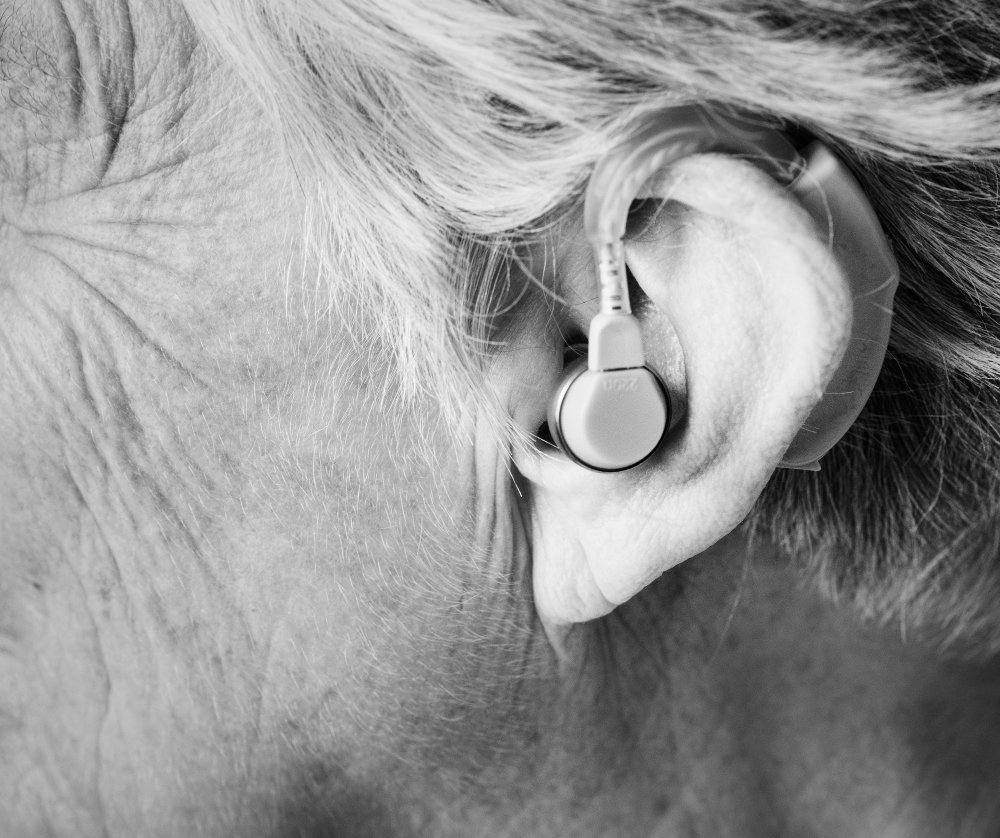
Modern hearing aids do more than just amplify sound. They are technological devices designed to restore the clarity and richness of sound the brain has lost. Early use offers direct benefits for cognitive health:
-
It reduces cognitive effort: By receiving a clearer sound, the brain doesn’t have to work as hard to decipher it, freeing up resources for memory and attention.
-
It improves clarity in conversations: It allows people to actively participate in social life again, combating isolation.
-
Stimulates the brain: Constant exposure to a rich sound environment keeps auditory pathways and associated brain areas active and healthy.
Recent studies confirm that the use of hearing aids in people with hearing loss can significantly reduce the risk of developing dementia.
Your hearing health is your brain health
Taking care of our hearing is one of the smartest and most accessible ways to protect our brain and promote active, healthy aging. Hearing loss is not just a minor inconvenience, but a modifiable risk factor for cognitive decline and Alzheimer’s disease.
Acting promptly, getting regular checkups, and seeking solutions when needed makes all the difference between a life of disconnection and a full, connected, and mentally active life. If you’ve noticed any warning signs or simply want to ensure your hearing is in good condition, don’t wait any longer.
We invite you to schedule a preventative hearing test. It’s a simple step that can have a huge impact on your quality of life and protect your long-term brain health.
For more information on how to improve your quality of life and care for your hearing health, we invite you to read our article, “2025 Guide: How to Finance Your Hearing Aids and Improve Your Life.” There you will find helpful tips, practical resources, and all the information related to financing your hearing aids and maintaining an optimal hearing experience.