Table of contents
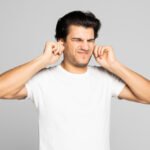
Having a clogged ear is a very common sensation—involving pressure inside the ear, muffled sounds, or the feeling of hearing as if you were underwater. It can occur after a cold, a flight, or getting out of a pool, or even suddenly, without an obvious cause.
In most cases, the underlying cause is a wax plug, congestion, pressure changes, or trapped water in the ear. However, when the blockage appears suddenly, persists for several days, or is accompanied by hearing loss, ringing, or vertigo, it is worth assessing what is going on.
At Clinicaudio, we frequently encounter a recurring scenario: people arriving convinced they have an earwax blockage because they notice their hearing is worse in one ear. Sometimes that is indeed the case; at other times, the ear canal is clear, and the underlying cause is different. That is why one of the first things we assess is how the sensation began, whether it affects one or both ears, and whether hearing has actually changed.
Important
If you experience a sudden drop in hearing—whether it happens abruptly, upon waking, or over a period of up to 72 hours—seek urgent medical or ENT (ear, nose, and throat) evaluation, even if it feels like a simple blockage or there is no pain. You should be seen the same day or within the first 24 hours. A routine audiological check-up is not a substitute for this type of care.
If you notice that your hearing has changed, we can help you find out what is happening.
Why does my ear feel blocked?
The sensation of a blocked or full ear occurs when something hinders the normal transmission of sound or when there is a pressure difference between the outside and the middle ear.
A key structure is the Eustachian tube, a small passage connecting the middle ear to the back of the nose and throat. Its function is to balance the pressure on both sides of the eardrum. When it becomes inflamed or fails to open properly—common occurrences during a cold, an allergy, or a change in altitude—symptoms such as pressure, clicking sounds, and muffled hearing may arise.
The problem may also be located in the external ear canal—for example, due to earwax or water—or behind the eardrum, when fluid accumulates in the middle ear.
That is why a “blocked ear” is a symptom, not a diagnosis. At Clinicaudio, we do not start with the assumption that every blockage is caused by earwax; instead, we first try to identify where the problem might lie.
Most common causes of a blocked ear
Ear blocked by earwax
Earwax naturally protects the ear canal and normally moves outward on its own. The problem arises when it accumulates and forms a plug.
It can cause muffled hearing, pressure, ringing, itching, or the sensation of having one ear blocked.
One of the most common errors we encounter in consultations is assuming that reduced hearing necessarily means a buildup of earwax. While a visible obstruction makes the cause clear, if the ear canal is clear yet the person still perceives a difference between the two ears, it makes more sense to evaluate their hearing than to keep trying to “unblock” the ear.
For hearing aid users, an accumulation of earwax can also make the device seem quieter. Before adjusting its programming, it is advisable to check the ear, the hearing aid itself, and its filters.
Do not use cotton swabs to try to remove earwax; they can push it deeper and compact it near the eardrum.
Ear clogged due to mucus or a cold
When you have a cold, sinusitis, or nasal congestion, the Eustachian tube can also become inflamed. This makes it difficult for the middle ear to properly equalize pressure and can cause a sensation of pressure, clicking sounds when swallowing, muffled hearing, or a feeling of fluid.
Although people commonly speak of “mucus in the ear,” the problem is usually that congestion is hindering the functioning of the Eustachian tube.
One helpful clue is that, when the problem is related to pressure, the sensation sometimes changes when yawning, swallowing, or moving the jaw. While this isn’t enough for a home diagnosis, it helps explain why two cases of a blocked ear might have different causes.
Ear clogged due to pressure, flying, or diving
During a flight—especially during takeoff and landing—external pressure changes rapidly. If the middle ear fails to equalize this pressure, the typical sensation of a blocked ear occurs. The same can happen when diving or experiencing sudden changes in altitude.
Yawning, swallowing, chewing gum, or gently performing a pressure-equalizing maneuver usually helps. In most cases, it goes away within minutes or a few hours.
If the pain is intense or the ear remains blocked for a long time afterward, it is advisable to assess whether barotrauma or another condition has occurred.
Ear clogged with water
After swimming or showering, water can become trapped in the ear canal.
It usually clears up on its own. However, at Clinicaudio, we observe that when there is already an accumulation of earwax, water can become trapped, causing an ear that previously showed few symptoms to feel completely blocked.
If moisture remains for too long, it can also promote otitis externa.
Otitis or fluid in the middle ear
After a respiratory or ear infection, fluid may remain accumulated behind the eardrum even though there is no longer an active infection.
This can cause a sensation of fullness in the ear, pressure, and temporary hearing loss.
There is a distinction we frequently explain during consultations: earwax is located in the external ear canal, whereas in otitis media with effusion, the fluid is behind the eardrum. A person might describe both conditions in the same way, but the approach to treatment differs.
Other causes requiring evaluation
Sudden hearing loss
Rare, but urgent. Sudden hearing loss can manifest as a sensation of fullness, pressure, or a feeling of the ear being blocked, often without pain. If hearing loss occurs suddenly—within hours or up to 72 hours—it requires medical or otolaryngological evaluation that same day or within the first 24 hours, even in the absence of pain. It does not need to affect only one ear or be accompanied by tinnitus or vertigo to be considered urgent.
Ménière’s disease
A recurring sensation of pressure can also occur in Ménière’s disease, typically accompanied by episodes of vertigo, tinnitus, and fluctuating hearing loss.
When these symptoms appear together and recur, we are no longer simply talking about “unclogging” an ear. It is necessary to investigate what is happening within the auditory and vestibular systems.
How to safely unclog an ear
There is no single method for unclogging the ear. The solution depends on the cause.
If the ear is blocked due to pressure
You can try yawning, swallowing several times, sipping water, or chewing gum.
You can also perform a gentle Valsalva maneuver: close your mouth, pinch your nose, and try to exhale very gently. It should never be done forcefully.
If it is related to a cold
Maintaining good hydration and managing nasal congestion can help the Eustachian tube return to normal function. If you need to use decongestants or other medications, consult a doctor or pharmacist first.
If you suspect you have an earwax plug
Do not insert anything into the ear.
There are products available to soften earwax, but they are not suitable for everyone—especially if there is pain, discharge, infection, a history of ear surgery, or a possible perforated eardrum.
At Clinicaudio, we prefer to verify before treating. If the ear canal does not explain the blockage, assessing each ear separately makes it possible to determine whether a genuine hearing difference exists.
Depending on the case, tests such as pure-tone audiometry (which measures hearing thresholds), speech audiometry (which assesses speech comprehension), or tympanometry (which provides information about the middle ear) may be used. Not all of them are necessary in every case; they are selected based on symptoms and observations made during the assessment.
If you have water in your ear
Tilt your head toward the affected side and gently pull on the outer ear to facilitate drainage. Dry only the outer part and avoid inserting paper, cotton swabs, or other objects.
What you should never do to unclog your ear
Some common remedies can worsen the problem.
Cotton swabs: they can push earwax toward the eardrum.
Keys, hairpins, or toothpicks: they can cause injuries and even perforations.
Ear candles: they have not been proven effective and can cause burns.
Performing the Valsalva maneuver with too much force: excessive pressure can damage the ear.
Irrigating without knowing the cause: this can be counterproductive if a perforation, infection, or other abnormality is present.
At Clinicaudio, we apply a simple rule: before attempting to remove something from the ear, you must verify that there is actually something to remove.
Clogged ear without pain: should I be worried?
Having a blocked ear without pain is common and can be caused by earwax, congestion, pressure changes, or water. However, the absence of pain does not mean it can always be ignored.
Another situation we encounter at our centers involves a person who wakes up and notices their hearing is significantly worse in one ear, yet waits because they think it will “clear up on its own.” In this case, the timing of the onset matters more than the pain.
If you could hear normally yesterday but there is a clear difference between your two ears today, you should not automatically assume it is due to earwax.
Clogged ear and ringing: when to pay closer attention
A blocked ear accompanied by buzzing or tinnitus can be due to relatively simple causes, such as earwax or pressure changes.
However, if a sensation of fullness, tinnitus, and clear hearing loss appear suddenly—especially in only one ear—the criteria change.
Sudden hearing loss can be mistaken for an earwax impaction or congestion. The audiometric criterion—a loss of at least 30 dB across three consecutive frequencies within a 72-hour period—serves to confirm the clinical diagnosis, but it should not be used as a threshold for self-assessment at home; any sudden, distinct drop in hearing requires urgent attention, without waiting to see if it meets those specific figures.
That is why, at Clinicaudio, we emphasize the importance of distinguishing between a sensation of blockage and actual hearing loss. If the ear canal is clear but tests reveal a significant drop in hearing, the priority shifts from “unblocking” the ear to seeking prompt medical evaluation.
You can find more information in our article on sudden deafness and sudden hearing loss, or in our guide to tinnitus.
How long does it take for an ear to unclog?
It depends on the cause. A change in pressure may resolve within minutes or a few hours. Trapped water also tends to clear up quickly.
When associated with a cold or the Eustachian tube, it can persist for several days. If there is an earwax plug, the sensation may continue until the obstruction is removed.
At Clinicaudio, we recommend paying special attention to these signs:
Did it appear suddenly? Does it affect only one ear? Do you notice that your hearing is actually worse?
If there has been a sudden change in hearing, simply waiting for it to “unblock” is not the best option, even if only one of these conditions is met. All three do not need to be present for the situation to warrant urgent assessment.
When to consult a specialist
It is advisable to carry out an assessment if:
- The ear remains blocked after several days.
- There is persistent pain.
- Fever or discharge develops.
- There is vertigo or dizziness.
- The blockage is recurring.
- It affects only one ear, with no apparent cause.
- It is accompanied by persistent tinnitus.
- You notice that your hearing is clearly worse.
If sudden hearing loss occurs, you should seek medical evaluation as soon as possible.
At Clinicaudio, a check-up involves more than just determining whether you hear well or poorly. Our professionals compare both ears and, where appropriate, assess hearing thresholds, speech comprehension, and the condition of the middle ear. The goal is to gather data that will guide the next step.
Have you had a blocked ear for several days without knowing why?
Frequently Asked Questions About a Clogged Ear
How can I unclog my ear quickly?
It depends on the cause. If it is due to pressure, yawning, swallowing, or performing a gentle Valsalva maneuver may help. If you suspect the presence of earwax, avoid inserting objects into the ear.
Why is one of my ears clogged but the other isn’t?
It could be due to earwax, water, pressure issues, or middle ear problems. If it affects only one ear and you notice a clear difference in hearing, it is worth having it checked.
Can a clogged ear cause ringing?
Yes. Earwax, pressure changes, and other auditory disturbances can simultaneously cause a sensation of ear fullness and tinnitus.
When is a blocked ear an urgent matter?
It also requires prompt evaluation if it appears suddenly accompanied by evident hearing loss, especially in one ear, or if there is severe vertigo, discharge, or significant pain.
A blocked ear can usually be treated, but first you need to know what is causing it.
Most cases of clogged ears are caused by common issues such as earwax, congestion, water, or pressure changes.
However, the experience gained by Clinicaudio professionals across their various centers reveals something important: two people may describe exactly the same sensation yet require different courses of action.
That is why we do not simply stop at the complaint of a “blocked ear.” We assess how it started, whether it affects one or both ears, and what other symptoms are present; when necessary, we measure hearing to obtain objective information.
If you notice that the way you hear has changed, we can help you understand what is happening.
If you notice that the way you hear has changed, we can help you understand what is happening.
Don’t normalize hearing less clearly simply because you feel like your ear is “blocked.”
You might also be interested in
If a blocked ear is accompanied by dizziness or vertigo, consult our guide on dizziness and vertigo of auditory origin.
If you notice a change in your hearing, also consult our article on degrees of hearing loss.